



Understanding Pick and Place Robot Costs for 2026: From DIY to Full Automation
- Nov 21, 2025
- 5 min read
Updated: Jan 14
In recent years, the integration of automation in manufacturing and logistics has gained immense momentum, with advanced pick-and-place systems significantly enhancing throughput and operational consistency. This trend is particularly noteworthy as supply chains continue to recover from recent disruptions and labor challenges persist, making 2026 a pivotal year for the proliferation of more accessible, cost-effective robotics solutions. For industry players, particularly those in smaller facilities, the arrival of modular robotics platforms presents new opportunities for customization, efficiency, and rapid deployment.
By embracing these innovative robotic solutions, businesses can not only streamline operations but also maintain a competitive edge in an increasingly automated global market. This seamless integration of technology ensures that companies can adapt swiftly to changing market demands, ultimately leading to enhanced productivity and sustained growth.
What Types of Pick and Place Robots Are Available in 2026?
Pick and place robots are purpose-built manipulators designed to transfer parts between fixed or semi-fixed locations with speed, precision, and repeatability, reducing manual handling and variability. They are now foundational across electronics assembly, pharmaceutical filling, food packaging, e-commerce fulfillment, and warehouse sorting.
As manufacturing and logistics continue to prioritize throughput, consistency, and labor resilience, demand for pick and place automation has accelerated. In 2026, the market has clearly shifted toward more affordable, modular, and software-driven systems, lowering the barrier to entry while still supporting industrial-scale performance.
This spectrum now ranges from desktop and DIY systems used for prototyping, all the way to fully integrated industrial robot cells capable of 24/7 operation. Understanding these tiers is essential for setting realistic cost expectations and selecting the right level of automation.
What Drives the Cost of a Pick and Place Robot System?
Understanding the true cost of a pick and place robot in 2026 requires looking beyond the sticker price. While entry-level systems have become more affordable and modular, hardware selection, software architecture, and integration scope still determine whether a project stays within budget or escalates into a full industrial investment.
Hardware Cost Drivers: Payload, Speed, and Precision
Core hardware components—actuators, servomotors, sensors, grippers, and end effectors—account for a significant portion of overall system cost because they directly define what the robot can physically do.
Key hardware factors include:
High-torque servomotors for fast cycle times and heavier payloads
Precision gearboxes or direct-drive joints for repeatability
Vision sensors and cameras for part detection, orientation, and quality checks
Custom grippers or vacuum tooling matched to part geometry
In 2026, improved component availability has lowered entry costs, but hardware choices still create sharp price jumps. A system designed for lightweight electronics handling may fit a modest budget, while adding high-speed motion, tight tolerances, or advanced vision can quickly move a project into industrial price ranges.
Integration Costs: Where Budgets Often Expand
Integration is frequently underestimated—and often becomes the largest cost multiplier.
Beyond the robot arm itself, integration typically includes:
Conveyors and material handling equipment
Part fixturing and tooling
Machine vision calibration and lighting
Safety systems, guarding, and controls
PLC and factory network integration
Each added subsystem increases engineering time, commissioning effort, and validation complexity. Even in 2026, when modular platforms reduce effort, custom layouts and legacy equipment compatibility still require experienced automation engineers or third-party integrators.
Software, Programming, and Lifecycle Costs
Hardware gets robots moving—but software determines long-term economics.
Buyers should account for:
Robot control software and motion planning
Vision and inspection software licenses
Proprietary interfaces or vendor ecosystems
Ongoing updates, support contracts, and cybersecurity patches
Programming effort is a major variable. Systems that integrate cleanly with existing PLCs and manufacturing execution systems reduce deployment time, while closed or proprietary environments can increase dependence on specialized engineers.
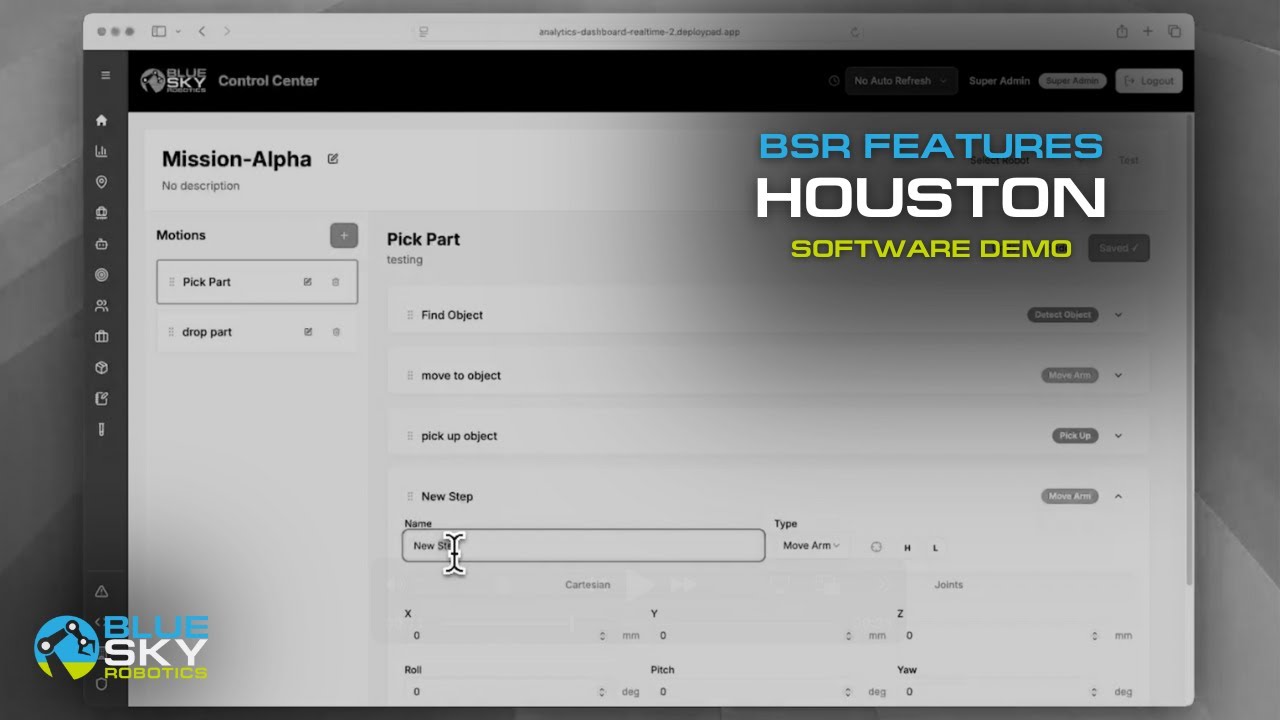
A useful overview of how analytics and software influence automation lifecycle cost can be found here:
Comparing DIY, Mid-Range, and Fully Automated Systems.
Costs for pick-and-place solutions span a wide spectrum depending on scale, components, and integration complexity. At the hobbyist end, builders can keep material expenses low—often in the $300–$3,000 range—by choosing economical controllers, stepper/servo motors, linear guides, and basic end-effectors; a practical guide that breaks down how to minimize parts and assembly expenses is available for DIY pick-and-place parts. These DIY rigs deliver rapid prototyping value and can produce payback in weeks to a few months for small-batch or R&D tasks, but they sacrifice long-term robustness, throughput, and regulatory compliance compared with commercial systems.
Mid-range solutions commonly used in small-to-medium manufacturing facilities—integrating collaborative arms, machine vision, conveyors, and modest safety features—typically land in the $15,000–$150,000 bracket and often realize ROI in roughly 6–24 months depending on labor savings and utilization. Fully automated, high-throughput systems designed for industrial lines, complete with custom tooling, PLC integration, safety fencing, and system validation, usually start around $250,000 and can scale into the millions; these projects generally expect ROI over 1–5 years but are justified when cycle time, yield, and total cost per part demand full automation. The 2026 trend toward more affordable entry-level and modular robotics is narrowing the gap between categories, reducing overall pick and place robot cost barriers and improving payback timelines for growing manufacturers.
Frequently Asked Questions
What is the average cost of a pick and place robot in 2026?
In 2026, typical pick-and-place systems range from roughly $1,000–$25,000 for DIY and entry-level modular units, $25,000–$100,000 for mid-tier collaborative and small-production cells, and $100,000–$500,000+ for fully integrated industrial solutions. Pricing is driven largely by precision, payload capacity, cycle speed, onboard vision and sensing, and the level of software and system integration required—higher payloads and micron-level repeatability substantially increase cost. With growing automation demand in manufacturing and logistics, 2026 shows a clear shift toward more affordable entry-level options that let businesses scale from DIY builds to industrial-scale automation, so readers should expect to explore a full spectrum of cost categories as they evaluate needs and integration complexity.
Are DIY pick and place robots reliable for business use?
DIY pick and place robots can be reliable for prototyping, proof-of-concept work, and educational projects because they reduce upfront pick and place robot cost and reflect the 2026 trend toward more affordable, entry-level and modular systems, but their performance is best suited to low-volume, non-critical tasks where flexibility and cost savings matter most. For sustained, mission-critical production businesses you should expect lower repeatability, throughput and limited vendor service and support compared with industrial models, so plan your investment with the full range of costs in mind—from DIY builds for development to industrial-scale automation for high-reliability operations.
How long does it take to recoup the initial investment in automation?
Payback periods for automation typically range from roughly 6 months for small, entry-level or DIY pick-and-place setups to 1–5 years for full industrial-scale systems, with many mid-size deployments returning investment within 12–24 months depending on throughput and local labor rates. Productivity gains, labor savings, reduced errors and higher uptime are the primary drivers of ROI, and the 2026 trend toward more affordable entry-level and modular robotics — together with falling pick and place robot costs — is shortening payback times for smaller manufacturers and logistics operations. Exact timing hinges on production volume, integration and maintenance expenses, and wage structures, so reviewing cost categories from DIY builds to industrial automation will give the most realistic estimate for your situation.
2026 Takeaway
While pick and place robots are more accessible than ever, cost drivers remain highly application-specific. Hardware capability, software flexibility, and integration depth—not just robot price—define the real investment.
In 2026, successful automation projects are those that budget holistically, accounting for deployment, lifecycle, and scalability, not just the robot itself.
The integration of cobots in various industries is not just a futuristic concept, but a present reality that holds immense promise. To discover more about how cobots could revolutionize your business operations, contact an expert from Blue Sky Robotics today.