

Optimizing Storage with Automated Warehouse Racking Systems
- Jan 8
- 5 min read
Manufacturing and warehousing operations face growing pressure to handle more SKUs, tighter footprints and faster order cycles. An automated warehouse racking system pairs dense vertical storage with mechanized retrieval to reclaim floor space, shorten travel times and increase throughput for operations focused on measurable efficiency gains.
Beyond physical density, software integration and automation link racking hardware to real-time inventory control, improving accuracy, reducing manual touches and enabling dynamic slotting and replenishment. The article focuses on selection, integration and customization options for high-density storage solutions so teams can match system capabilities to workflows and realize ROI; we begin by examining how these systems enhance space utilization and warehouse efficiency.
Understanding Automated Racking Systems and Their Types.
Automated racking systems (ARS) are mechanized storage solutions that store, retrieve, and transport goods within a warehouse with minimal manual intervention, serving as the backbone of modern logistics by improving throughput and space utilization. By combining conveyors, cranes, shuttles and software controls, ARS reduce manual labor and errors while enabling real‑time inventory visibility through integration with warehouse management systems (WMS) and Industry 4.0 technologies, which together support smarter slotting and predictive maintenance.
Common ARS variants include automated storage and retrieval systems (AS/RS) for high‑density pallet storage, case and tote shuttle systems for flexible batch picking, and pallet flow racks for first‑in/first‑out (FIFO) inventory that benefits perishable or high‑turnover goods. For example, shuttle systems excel in multi‑deep, mixed‑SKU environments where rapid, parallelized access improves picking efficiency without the footprint of large crane infrastructure, while pallet flow racks prioritize FIFO and AS/RS cranes handle heavy loads and continuous high throughput.
Choosing the right racking system depends on throughput targets, inventory turnover, SKU mix, and facility layout constraints such as aisle width and ceiling height, as well as operational priorities like cost, scalability, and labor reduction. The growing role of robotics and automation further shifts selection criteria toward systems that can integrate sensors, machine vision, and WMS for seamless control and data‑driven optimization, maximizing space use and long‑term return on investment.
How Automated Racking Systems Integrate with Warehouse Management Software
Automated racking systems connect directly to warehouse management and enterprise resource planning platforms so inventory, order fulfillment, and equipment control operate as a single, coordinated system. To achieve synchronized control across functions, automated racking systems typically rely on WMS and ERP integration that enables centralized tasking, order orchestration, and real-time status feedback between software and physical racking hardware. This bi-directional communication—delivered via APIs, middleware, or industry-standard protocols—lets operators convert high-level demand signals into precise motions for cranes, shuttles, and conveyors while maintaining audit trails and compliance records.
Robotics and embedded sensors feed continuous telemetry into the WMS, enabling real-time inventory tracking through RFID, vision systems, and position or weight sensors so stock locations and quantities are always current. When combined with cloud-based IoT platforms and analytics, these data streams power data-driven optimization such as dynamic slotting, predictive replenishment, and throughput smoothing to reduce travel time and labor touchpoints. The result is a measurable uplift in space utilization and operational efficiency—fewer stock-outs, faster cycle times, and lower manual intervention—making automated racking systems a keystone of Industry 4.0 warehouses.
Top Companies Specializing in Custom Automated Racking Design and Installation
Several industry leaders now bundle hardware, software and integration into comprehensive turn‑key automated racking solutions that combine AS/RS, shuttle systems and pallet-to-person robotics tuned to specific SKUs and throughput goals. These specialists — from traditional racking manufacturers to system integrators and robotics startups — focus on maximizing space utilization and reducing manual labor through tight integration with warehouse management systems and Industry 4.0 platforms. That integration drives higher throughput, more predictable operations, and easier scaling as volumes grow.
Selecting a partner that provides lifecycle support and hands‑on training is critical: look for clear SLAs, spare-parts availability, remote diagnostics, scheduled software updates, and formal operator and maintenance training programs that minimize downtime. Evaluate warranty coverage and scalability by requesting performance validation, references from high‑volume operations, and upgrade paths that preserve equipment investment while enabling phased rollout. These vendor attributes determine long-term ROI as much as initial system performance.
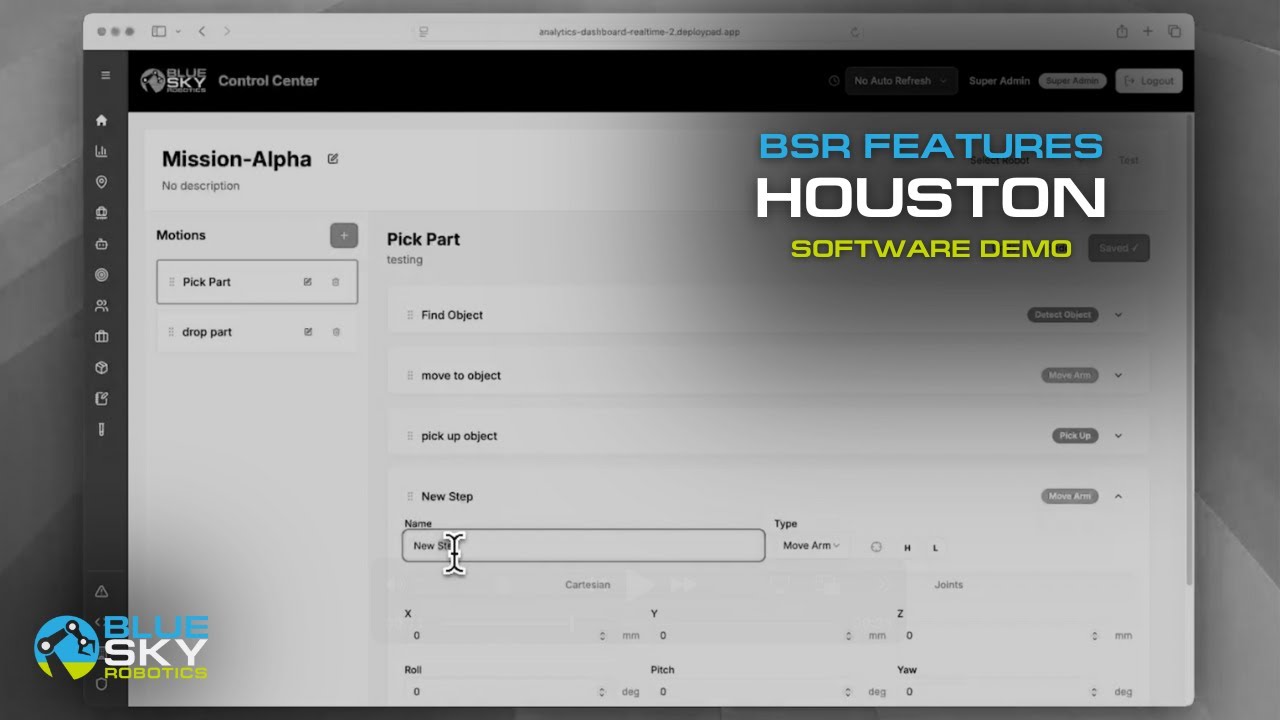
Emerging tools such as AI‑driven design optimization and 3D layout simulation allow bespoke racking configurations to be validated virtually, shortening engineering cycles and improving space efficiency while predicting throughput and collision scenarios before installation. Blue Sky Robotics frequently partners with system integrators and software specialists to marry robotic picking, advanced control software, and simulation into end‑to-end automation solutions that meet both current needs and future expansion. The result is customizable, scalable systems that reduce manual handling, improve safety, and accelerate payback.
Frequently Asked Questions
What are the main benefits of automated racking systems for warehouses?
Automated racking systems maximize storage density and optimize floor space by using vertical, compact layouts and modular designs that increase usable capacity and support scalable expansion as business needs evolve. By integrating robotics with warehouse management systems and Industry 4.0 controls, they accelerate order picking, improve accuracy, and reduce labor costs while shifting heavy lifting and repetitive tasks to machines. This automation also enhances safety by lowering the risk of injuries and product damage and enables more flexible operations to handle peak demand and changing workflows.
How do you decide which type of automated racking system is suitable for your operation?
Choose a system by aligning its technical strengths with your inventory characteristics, order frequency, and any temperature-control requirements—select high-density AS/RS or shuttle systems for space-constrained, high-throughput needs and climate-rated solutions for cold or controlled environments. Analyze your facility layout early to confirm aisle widths, rack heights, power and conveyor routing, and integration points so the chosen system will physically and operationally fit within existing workflows. Finally, evaluate ROI by modeling labor savings, throughput improvements, and additional usable storage while prioritizing options that integrate robotics, Industry 4.0 connectivity, and your warehouse management system to maximize efficiency, reduce manual labor, and optimize space utilization.
Can existing warehouses retrofit automated racking solutions?
Yes—many automated racking systems are modular and designed for retrofit, with robotics and automation components that can be adapted to existing warehouse layouts to boost throughput, reduce manual labor, and maximize vertical space utilization. Successful retrofits, however, hinge on a detailed analysis of structural load capacity, floor flatness and aisle geometry to confirm the building can safely support racking, conveyors, and mobile robotics. Partnering with experienced integrators ensures smooth installation, precise system calibration, and seamless integration with warehouse management systems and Industry 4.0 controls so the retrofit achieves the intended efficiency and accuracy gains.
Streamlining Efficiency Through Smart Racking Solutions
Automated warehouse racking systems are the backbone of modern logistics operations, transforming how warehouses maximize space, increase efficiency, and retain acute inventory accuracy. This transformation hasn't been achieved by investing in automation technologies randomly; instead, it requires careful selection, thoughtful integration, and strong collaboration with leading-edge vendors committed to success.
These insights align squarely with Blue Sky Robotics' mission: to propel warehouse automation into the future via advanced robotics, collaborative robots (cobots), and intelligent management software. Advancements in these areas, particularly in the realm of smart racking solutions, promise to define the next era of warehouse operations. Let's continue shaping better, more efficient, and surprisingly human-enhanced automated futures together. Discover how Blue Sky Robotics can guide you on your automation journey today.