



Smart Storage Automation: Exploring Automatic Racking Systems
- Jan 8
- 5 min read
Rising e-commerce volumes and tighter delivery windows are pushing warehouses to adopt smarter storage approaches that combine robotics with advanced software. Smart storage automation dramatically increases throughput and pick accuracy while reducing labor strain by replacing manual moves with coordinated, automated racking and retrieval.
Leading suppliers in the U.S., such as AutoStore, Dematic, Honeywell Intelligrated, Swisslog, and Knapp, are shaping standards for density, software integration, and uptime in these installations. A practical examination of robotics-enabled racking solutions will cover system components, controls, and WMS integration, performance metrics, and steps to assess return on investment.
Understanding the Role of Automatic Racking Systems
Automatic racking systems are engineered storage and retrieval structures that combine high-density racks with mechanized conveyors, shuttles, or cranes to store, present, and move inventory within a fulfillment center. By tying directly into warehouse management systems and automated picking and packing lines, these systems reduce travel time, improve pick accuracy, and enable real-time order orchestration—benefits that have become critical as e-commerce demand increases for speed and accuracy. In practice, automatic racking contributes to space optimization, labor efficiency, and tighter order management by maximizing vertical storage, reducing manual handling, and providing accurate inventory visibility.
Industries from e-commerce and third-party logistics to grocery and pharmaceuticals rely on automatic racking to handle high SKU diversity, temperature-sensitive stock, and burst order volumes while maintaining traceability and compliance. Major integrators, including Dematic and SSI Schaefer, and the leading US providers bring deep expertise in system engineering, controls, and lifecycle support, helping operators choose between shuttle systems, AS/RS cranes, or modular shuttles based on throughput and footprint. Selecting the right system requires matching operational drivers—throughput, SKU dimensions, growth projections, and existing IT—so the investment delivers scalable performance and seamless integration with order management and warehouse software.
Core Design Elements and Lifecycle Support
Automatic racking systems for e-commerce fulfillment commonly combine shuttle-style carousels, vertical lift modules (VLMs), and robotic pick-and-place interfaces to condense storage density while supporting high pick rates. Layered with sensors and computer vision—barcode scanners, 3D cameras, and machine-vision inspection—these systems identify items, verify placement, and enable dynamic slotting that improves space utilization, order accuracy, and labor productivity.
Leading suppliers such as SSI Schaefer not only engineer the hardware but also provide full lifecycle support covering system design, installation, preventive maintenance, and operator training to keep throughput steady and reduce downtime. Because modern warehouses rarely replace all equipment at once, interoperability with cobots and robotic arms is essential; choosing a solution should be guided by SKU characteristics, throughput requirements, integration with warehouse management systems, and the maturity of vision and control software to get the expected gains in speed and accuracy. A careful automatic racking system selection based on these operational and technological factors ensures measurable improvements in storage density, order management, and labor efficiency.
How to Select the Right Automatic Racking System for E-commerce Fulfillment
Selecting the optimal racking system starts with clearly defined key selection criteria that capture storage density, automation level, throughput requirements, and software compatibility so decisions reflect both operational realities and future growth. Quantifying these criteria—cubic storage utilization, picks per hour targets, and integration needs with warehouse management or WMS APIs—creates a practical baseline for comparing technologies and vendors. Basing choices on measurable targets reduces costly retrofits and ensures the system supports speed and accuracy goals central to e-commerce fulfillment.
Next, evaluate how racking options map to SKU variety, order velocity, and warehouse footprint: dense, deep-rack or AS/RS layouts suit high-SKU assortments with lower velocity, while multi-tier, carousel, or goods-to-person solutions favor fast-moving, high-turn SKUs and compact footprints. Use simulation and predictive analytics to model peak season flows, picker travel times, and throughput under different configurations so you can validate design assumptions before committing to capital expenditure. These tools expose bottlenecks early and help prioritize investments that maximize space optimization and labor efficiency.
Finally, prioritize scalability and modularity so the chosen system can evolve with changing order profiles and business growth without complete replacement; modular racks, standardized interfaces, and software-configurable workflows enable phased rollouts and incremental automation. Consider vendor support for upgrades and interoperability with emerging technologies—this preserves order management performance and minimizes downtime as volumes rise. A selection process grounded in operational metrics, validated by simulation, and focused on modular growth will deliver the best balance of space utilization, labor savings, and long-term agility.
Frequently Asked Questions
What are the main benefits of using automated racking systems in e-commerce?
As e-commerce volumes grow, automated racking systems accelerate order fulfillment and improve pick accuracy and inventory visibility by combining high-density storage, real-time stock tracking, and streamlined order-routing that optimize space and order management for faster throughput. They also reduce labor costs and ergonomic strain by automating repetitive handling and enabling more efficient labor allocation, but achieving these benefits depends on careful automatic racking system selection—matching system capacity, throughput requirements, and integration with warehouse technology to your operational needs.
How much does it cost to implement an automatic racking system?
Costs vary widely depending on the level of automation you choose, warehouse size and layout, and the complexity of integrations with WMS, conveyors, and other fulfillment technology, so a basic semi-automated racking retrofit will be far less expensive than a fully automated AS/RS covering multiple aisles; selecting the right system for your operational profile and technology readiness is therefore essential to avoid overpaying for unneeded capability. Assess total cost of ownership and ROI over time by modeling labor savings, throughput gains, reduced errors, and improved space utilization—these long-term benefits often justify higher upfront investment for e-commerce operations that prioritize speed and accuracy, and choosing modular, scalable solutions can help align capital outlay with growth and performance goals.
Can existing warehouses be retrofitted with automated racking solutions?
Many existing warehouses can be retrofitted using modular, scalable automated racking systems that support phased installation to reduce downtime while improving speed and accuracy in fulfillment. Key to success is thorough spatial analysis and layout design to fit aisle geometry, ceiling height, and material flows, combined with selecting the right automatic racking system based on operational volumes, SKU profiles, and technology compatibility to realize gains in space utilization, labor efficiency, and order management. Engaging vendors for scenario modeling and staged deployment helps ensure the retrofit meets current e-commerce requirements and remains scalable for future growth.
Optimizing Warehouses with Smart Racking
The exploration of automatic racking in this article has revealed how these systems significantly augment warehouse efficiency, adaptability, and real-time inventory control. Crucial to their high performance are the integration of robotics and advanced software, which collectively ensure automation on a scalable level. This smooth interoperability serves as a testament to the power of modern technology in harnessing warehouse complexity for optimal results.
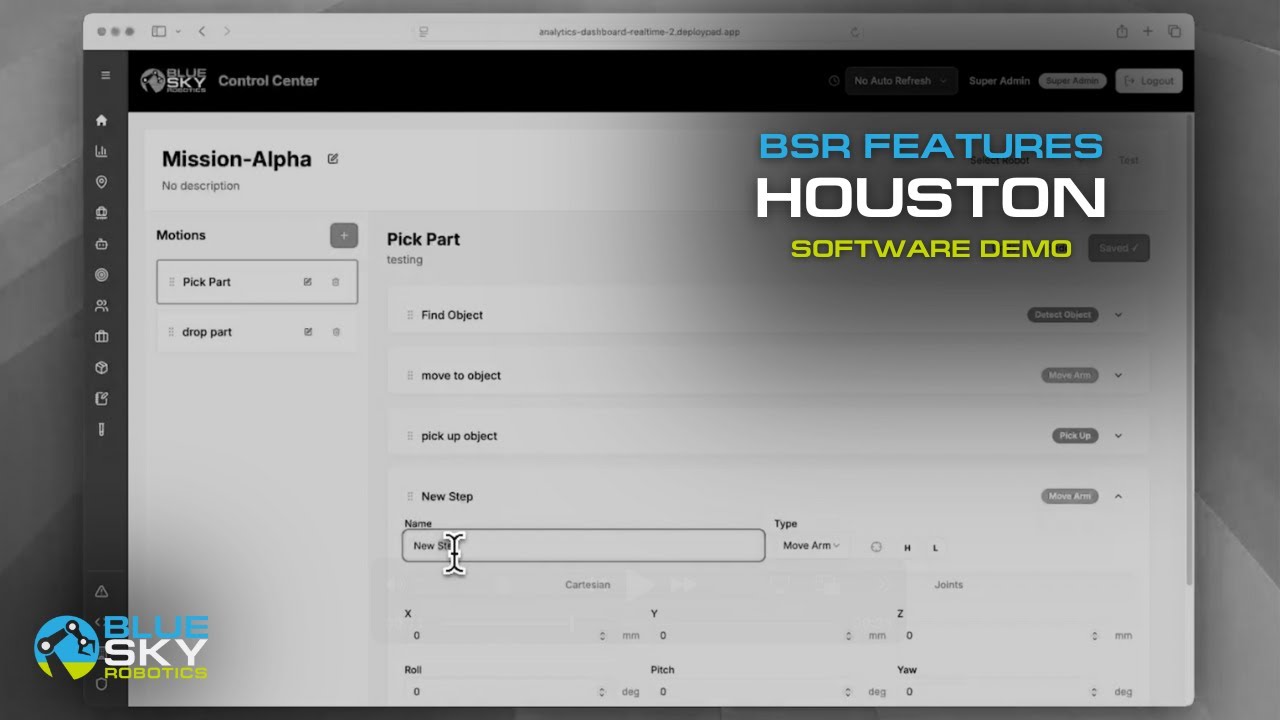
In line with this technology-driven progression, Blue Sky Robotics remains committed to pioneering innovations in smart storage automation and building integrated warehouse ecosystems. As the transition from traditional manual systems to highly-automated solutions rolls on, businesses can look forward to remarkable strides in productivity and precision. Explore more about how Blue Sky Robotics propels this warehouse transformation and realize the potential of tomorrow's automated storage today.