



Robotic Machine Tending: What Your Idle Spindle Is Actually Costing You
- Apr 6
- 5 min read
Updated: Apr 13
A CNC machine that costs $80,000, $120,000, or $200,000 to purchase is only earning its keep when the spindle is turning. Every minute it sits waiting for an operator to swap a part is a minute of capacity that is gone permanently. It cannot be recovered. It does not roll over to the next shift.
Most job shops and contract manufacturers underestimate how much of their theoretical capacity disappears this way. A machine running one shift with manual loading typically achieves 55 to 65 percent spindle utilization. Breaks, part changeovers, the operator stepping away, the natural rhythm of human labor: all of it adds up to a machine that is idle for roughly a third of the shift before a single off-shift hour is counted.
Robotic machine tending fixes this by removing the human from the load and unload cycle entirely. The robot loads the raw part, closes the door, waits for the cycle to finish, unloads the finished part, and loads the next one. It does this continuously, at consistent cycle times, across every hour of every shift the machine runs. It does not take breaks. It does not slow down in the second half of the shift. It does not call in sick on Monday morning.
This is the fundamental economics of robotic machine tending. Everything else follows from it.
What Spindle Downtime Actually Costs
The cost of an idle spindle is not just the machine's hourly depreciation. It is the accumulated cost of capacity that cannot be sold to customers, jobs that run longer than they should, overtime that gets paid to cover shortfalls, and the downstream pressure on delivery commitments.
A useful starting point: a CNC machining center running at $125 per billable hour represents roughly $2 per minute of capacity. A shop running one eight-hour shift with an operator loses an estimated two to three hours of spindle time per day to loading delays, break coverage, and natural workflow interruption. That is $240 to $360 of billable capacity lost per day, per machine, before accounting for any off-shift hours where the machine sits completely idle.
Run that math across a second and third shift that the machine could run unattended with a robot loading it, and the capacity recovery is substantial. A machine tending cell running lights-out for eight additional hours per day recovers $1,000 or more in billable capacity per machine per day, depending on cycle time and billing rate.
This is why robotic machine tending has one of the strongest ROI cases in manufacturing automation. The machine is already purchased and paid for. The tooling is set up. The programs are written. The only thing preventing the machine from running is the need for a human to swap parts. A robot at $6,999 that enables an additional shift of production pays for itself in days of recovered capacity, not months.
How Robotic Machine Tending Works in Practice
A robotic machine tending cell is straightforward in its basic configuration. A cobot arm is positioned at the machine's load point. A parts staging area holds raw stock for the robot to pick from and finished parts to deposit into. The robot communicates with the machine controller to know when the cycle is complete and the door is ready to open. It opens the door, removes the finished part, loads the raw part, closes the door, and signals the machine to start the next cycle.
The communication between robot and machine is the integration step that varies most between deployments. Some CNC controllers offer direct I/O connections that make this straightforward. Others require interface modules or custom wiring. The most important question to answer before selecting a robot is whether it supports the communication protocol your specific CNC uses.
Beyond the basic load-unload cycle, robotic machine tending cells frequently incorporate secondary tasks that the robot performs during the machine's cycle time: transferring finished parts to an inspection station, applying marking or labeling, deburring light edges, or staging parts for the next operation. Because the robot is waiting during the machine cycle anyway, adding these tasks costs nothing in cycle time and adds significant value.
Gripper Selection: Getting This Right Before Anything Else
The gripper is the component most likely to determine whether a machine tending cell runs reliably or requires constant intervention. It is also the component most commonly specified last and least carefully.
A parallel jaw gripper handles prismatic parts, blocks, and machined components reliably and is the most common choice for CNC tending. The jaw opening, force, and finger geometry all need to match the specific part being handled. A gripper sized for the average part in a high-mix environment will fail on the outliers.
For turned parts, a three-jaw or collet-style gripper matches the geometry of cylindrical workpieces better than a parallel jaw. For delicate finished surfaces, soft jaw materials or compliant grippers prevent marking.
Dual gripper heads, which hold one raw part and one finished part simultaneously, cut the time the machine door stays open in half by allowing the robot to swap parts in a single door-open event. For high-volume cells where every second of machine downtime matters, this is the configuration worth the additional investment.
Which Robot for Which Machine
Payload is the deciding specification. The robot must handle the heaviest part it will ever be asked to load, at the reach distance required to place it precisely into the machine fixture. Underspecifying payload here is the most expensive mistake in machine tending deployments.
For light turned and milled parts under 5 kg, the Fairino FR5 ($6,999) covers the majority of job shop CNC tending applications. Its 5 kg payload and 924mm reach handle most small-to-medium workpieces with the repeatability that precision machining demands. At this price point, the payback calculation from recovered spindle time is measured in weeks, not months.
For heavier castings, larger billets, or parts approaching 10 kg, the Fairino FR10 ($10,199) extends payload without a significant price jump. This is the right choice for shops running medium-sized turning or milling centers handling steel or aluminum billets.
For multi-machine cells where the robot tends two or more machines from a central position, the Fairino FR16 ($11,699) provides the reach and payload to cover a wider work envelope without repositioning the robot base.
For very light parts in high-mix environments, including small precision components, electronics housings, or plastic injection-molded parts, the UFactory Lite 6 ($3,500) is the lowest-cost entry into robotic machine tending and fits naturally on a benchtop cell next to small CNC lathes or mills.
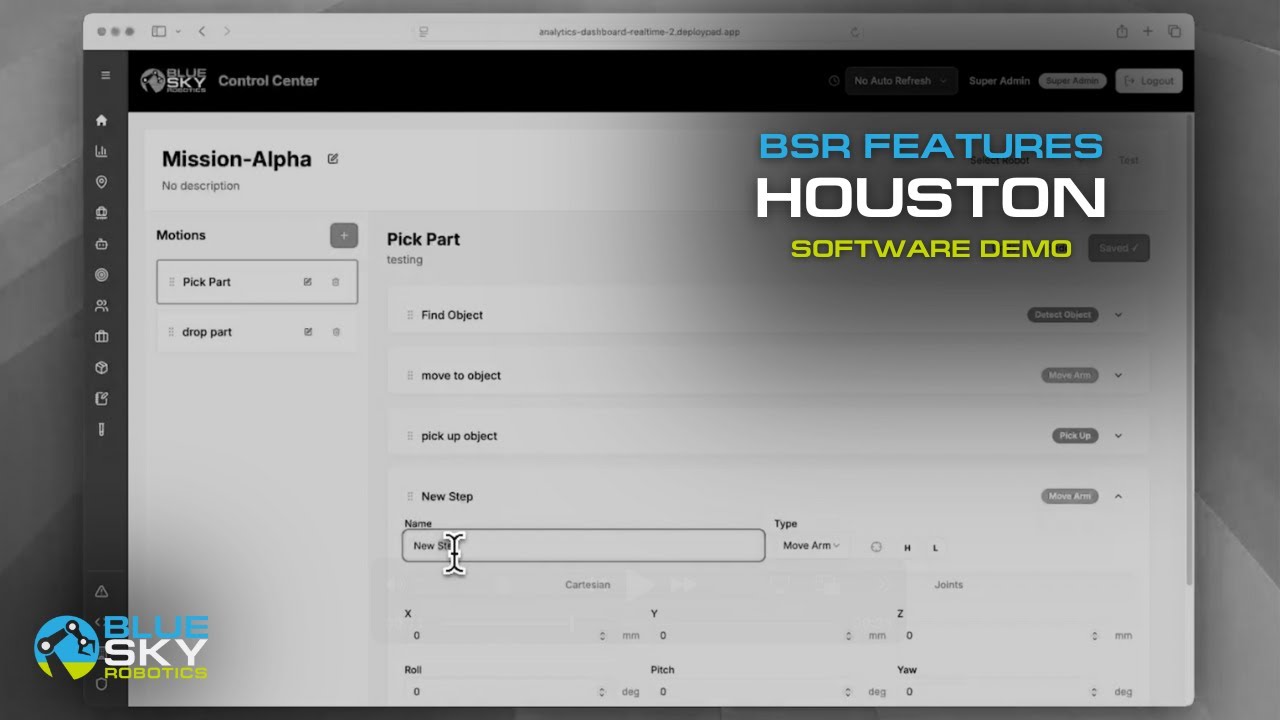
All of these integrate with CNC controllers via standard I/O, ROS2, and Python SDK, and are supported by Blue Sky Robotics' automation software for mission building and cycle management.
Running the Numbers for Your Operation
The Automation Analysis Tool at Blue Sky Robotics evaluates robotic machine tending feasibility for your specific machine, part, and shift configuration with real payback numbers. The Cobot Selector matches the right arm to your payload and reach requirements. And if you want to see a machine tending cell running on a real CNC before making any commitment, book a live demo with the Blue Sky Robotics team. To learn more about computer vision software, visit Blue Argus.
Your spindle is already paid for. Every hour it runs unattended is an hour of capacity you did not have yesterday.


