

Industrial Automation Solutions Efficiency Benefits: What a Cobot Actually Delivers
- Apr 6
- 3 min read
Updated: Apr 13
Most manufacturers already know automation improves efficiency. What they want to know is by how much, in which areas, and whether the price makes sense for an operation that is not running at Fortune 500 scale.
Those are fair questions. Industrial automation solutions efficiency benefits are well documented at the enterprise level, but the story for small and mid-size manufacturers is just as compelling and far less told. A cobot arm starting at $3,500 delivers the same core efficiency gains as automation that costs ten times more. The difference is that the payback period is measured in months, not years.
Here is what those efficiency benefits actually look like in practice.
Higher Output Without Adding Headcount
The most immediate efficiency benefit of industrial automation is throughput. A robot arm does not take breaks, call in sick, slow down at the end of a shift, or vary its cycle time based on how tired it is. It runs at the same speed and precision on cycle one as it does on cycle ten thousand.
For manufacturers running repetitive tasks like machine tending, pick and place, or palletizing, this consistency translates directly into higher output per shift. A single cobot covering one station eliminates the throughput variation that human fatigue introduces and extends effective production hours without adding headcount.
The global industrial automation market is estimated at $233.6 billion in 2026, growing at roughly 9.5% annually, driven in large part by manufacturers who have already validated this output benefit at scale. Small manufacturers are now accessing the same returns at entry-level price points that did not exist five years ago.
Reduced Defect Rates and Rework Costs
Automation does not get distracted. Every pick, placement, weld pass, or inspection follows the same programmed parameters, every time. For manufacturers whose defect costs or rework rates are tied to human inconsistency, this is one of the fastest-returning efficiency benefits of industrial automation solutions.
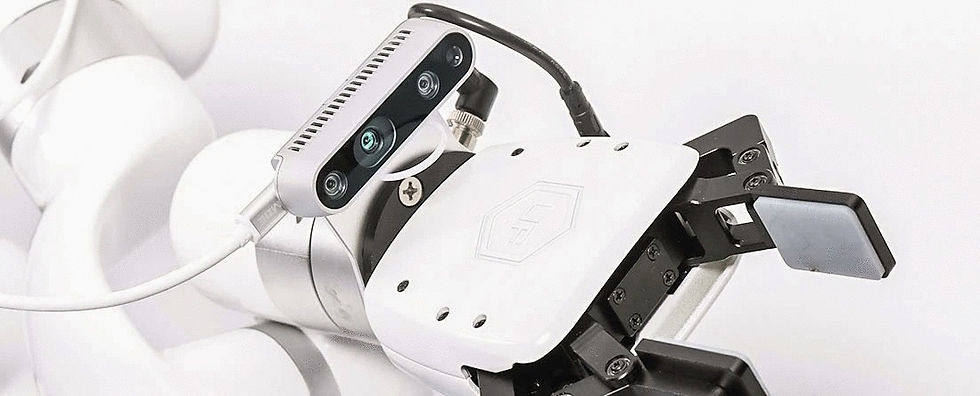
Vision-guided cobot systems take this further. A robot arm paired with a 3D camera can inspect parts in line, identify dimensional defects or placement errors before they reach the next production stage, and remove nonconforming parts from the flow automatically. Catching defects earlier in the process is substantially cheaper than catching them at final inspection or, worse, after shipment.
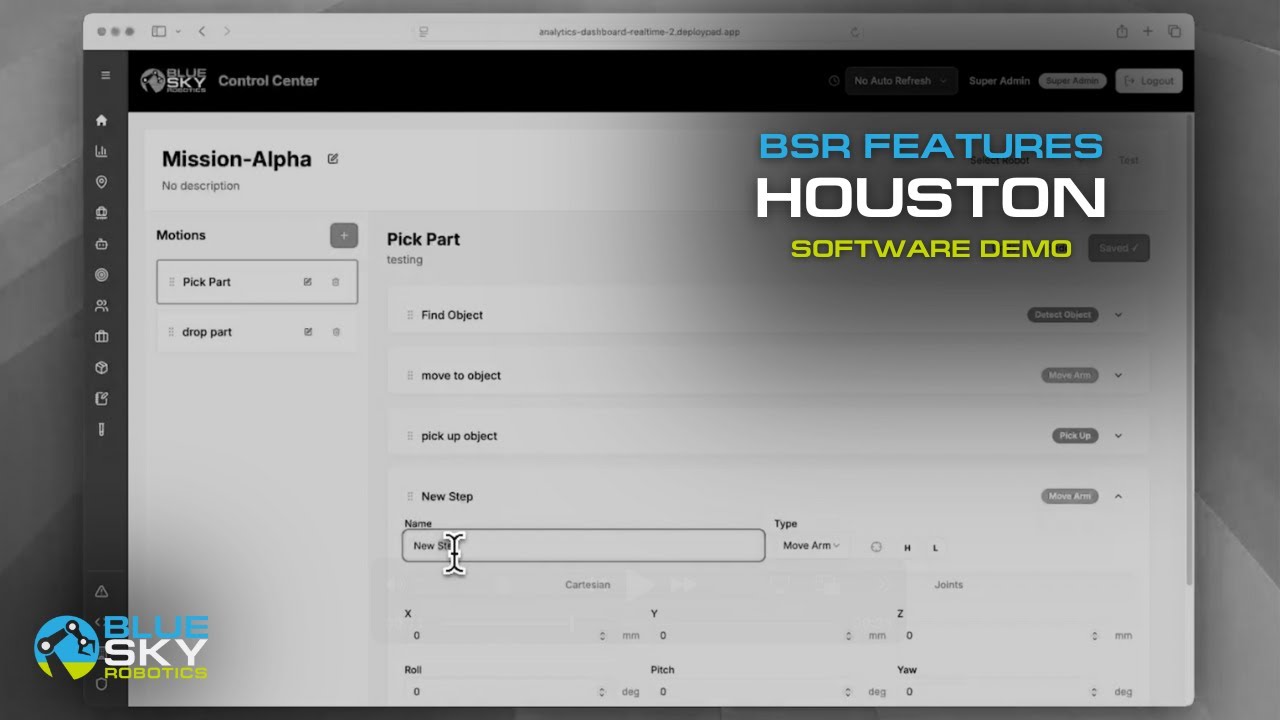
Blue Sky Robotics' automation software includes computer vision capabilities that support in-line quality checks as part of the same cell handling pick and place or machine tending tasks. One robot, multiple efficiency functions.
Lower Labor Costs on Repetitive Tasks
Automating a repetitive task does not eliminate jobs. It reallocates them. Workers who were manually loading a CNC machine, stacking pallets, or sorting parts can be moved to higher-value roles: setup, quality oversight, programming, customer-facing work. The labor cost of the repetitive task drops; the output of the remaining workforce increases.
The payback math on this is straightforward. A cobot arm running two shifts per day, five days per week, replacing one manual position costs a fraction of annual fully-loaded labor. Payback periods of 12 to 18 months are common for single-station deployments, and operations running three shifts recover the investment faster because the robot covers all three at no incremental cost.
Which Automation Solution Fits Your Efficiency Goal
The right robot depends on which efficiency bottleneck you are solving. Blue Sky Robotics carries the full range:
Throughput on light tasks: The UFactory Lite 6 ($3,500) is the entry point for small part handling, tabletop assembly support, and desktop inspection. It runs continuously without operator attention once programmed.
Consistent output on mid-range production tasks: The Fairino FR5 ($6,999) and Fairino FR10 ($10,199) cover the majority of machine tending, pick and place, and quality inspection applications in light to medium manufacturing.
High-volume material handling and palletizing: The Fairino FR16 ($11,699) and Fairino FR20 ($15,499) handle the end-of-line and heavy transfer tasks where labor costs and throughput bottlenecks are typically highest.
Finishing and coating automation: The AutoCoat System ($9,999) brings industrial automation efficiency benefits specifically to paint, powder coat, and adhesive applications, replacing manual spray processes with consistent, programmable robotic finishing.
Getting Started
The biggest barrier to realizing industrial automation solutions efficiency benefits is not cost. It is uncertainty about where to start and whether a given process is automatable.
The Automation Analysis Tool at Blue Sky Robotics is built to answer that question for your specific application, with real numbers. The Cobot Selector narrows the robot choice based on your payload, reach, and use case. And if you want to see efficiency gains demonstrated on a real cell before committing, book a live demo with the Blue Sky Robotics team. To learn more about computer vision software, visit Blue Argus.
Automation at this price point does not require a large capital budget or a systems integrator on retainer. It requires knowing which task to automate first and having the right robot for it.