



How Spray Robots Handle Part Variability: Cutting Calibration Costs with Smarter Automation
- Oct 2, 2025
- 3 min read
Spray robots have become a cornerstone of robotic finishing and surface finishing automation, offering consistency, efficiency, and safer working environments compared to manual painting. But one major obstacle continues to challenge manufacturers: part variability.
Even the most advanced spray robot can struggle when parts differ slightly in shape, size, or orientation. These differences may seem minor, but they can drive up calibration costs, reduce uptime, and create quality issues. For manufacturers running mixed product lines — especially high-mix, low-volume production lines — variability can be the difference between a profitable automation project and one that never pays back.
This article explores why part variability is such a costly challenge, and how vision systems and no-code automation software are helping companies overcome it — making technologies like Fairino robots more accessible and effective for industrial coating applications.
The Problem of Part Variability in Robot Painting
Spray robots are designed to follow precise paths. When every part looks the same and arrives in the same position, the system works flawlessly. But in reality, no production run is perfect.
A part might be misaligned on a conveyor.
A supplier batch may include slight variations in dimensions.
Complex geometries make orientation difficult to maintain.
For the robot, these small differences can cause big problems:
Overspray or gaps in coverage.
Uneven coating thickness.
Adhesion or durability failures that lead to rework.
In robot painting applications where quality standards are strict, variability often forces recalibration. That means downtime, additional labor, and higher operating costs — problems that multiply in high-mix, low-volume environments.
Why Calibration Costs Add Up
Calibration is not a one-time task. It’s a repeated cost driver.
Initial setup: Mapping spray paths, adjusting air pressure, and tuning flow rates for each new part or SKU takes time.
Recalibration cycles: New SKUs or minor part changes require repeated adjustments.
Skilled labor: Programmers and coating specialists are needed to set and maintain these parameters.
ROI impact: Long calibration cycles reduce throughput, increase costs, and make automation harder to justify for high-mix, low-volume operations.
Solutions: Reducing the Pain of Variability
1. Vision Systems for Adaptive Robotic Finishing
Part variability is often subtle — a few millimeters in placement or a minor shift in thickness. For a spray robot, though, this can mean wasted paint and inconsistent finishes.
Vision systems use cameras and sensors to capture each part in real time. Instead of relying on a rigid program, the robot dynamically adjusts its spray path, angle, and distance.
Key benefits include:
Accurate spray coverage, even with inconsistent part placement.
Less overspray and material waste.
Improved surface quality, lowering the chance of defects or rework.
In industries like automotive and electronics, where coating precision directly impacts durability and aesthetics, vision-enabled robotic paint booth setups can significantly reduce cost and downtime.
2. No-Code Automation Software
Programming spray paths is one of the biggest contributors to calibration costs. Traditional systems require skilled operators to write or adjust code whenever a new part enters production. When part variability demands constant adjustments, this dependency drives up both costs and lead times.
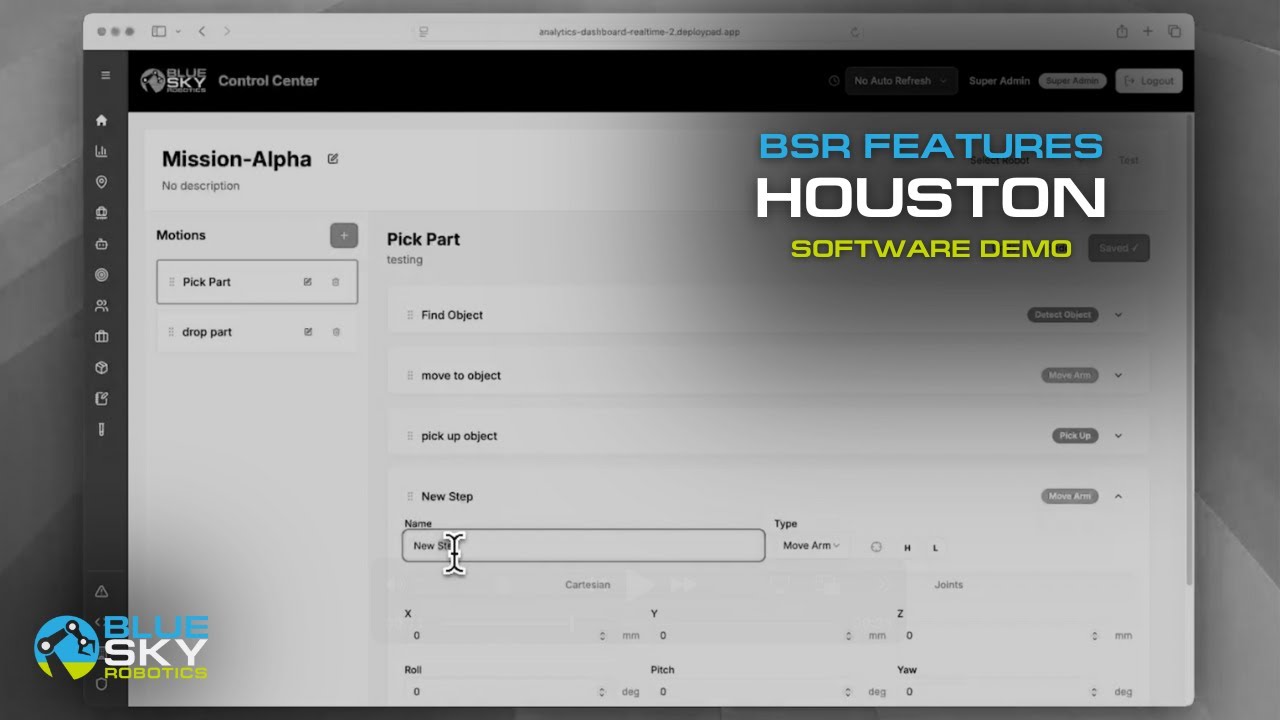
No-code automation software changes the equation. With simple, graphical interfaces, operators can adjust spray paths without writing code.
The benefits:
Shorter calibration cycles: New spray patterns can be programmed in minutes.
Reduced reliance on specialized labor: Operators with minimal training can make adjustments.
Faster changeovers: Makes robot painting more practical for smaller runs or frequent part changes, especially in high-mix, low-volume production lines.
Robotics manufacturers like Fairino supplies the robot hardware; the no-code control layer typically comes from an integrator or third-party platform. For example, integrators like Blue Sky Robotics deploy no-code interfaces on top of Fairino robots and pair them with explosion proof robots when hazardous environments require it.
Key Takeaways for Manufacturers
Part variability is one of the most expensive challenges in spray robot operations.
The main cost drivers are calibration cycles, downtime, and reliance on skilled programmers.
Manufacturers can mitigate these challenges with:
Vision systems that adapt to part differences in real time.
No-code software that simplifies path programming and changeovers.
Flexible platforms like Fairino, including explosion-proof options for hazardous environments.
Final Thoughts
Spray robots remain one of the most effective tools in surface finishing automation, but part variability can erode their value if not addressed. The combination of adaptive vision systems and no-code automation software is helping manufacturers cut calibration costs, reduce rejects, and improve uptime.
For companies struggling with variability in robot painting, investing in smarter tools and platforms is no longer optional — it’s the key to making robotic finishing reliable, safe, and profitable.
Interested in learning more about the Autocoat System by Blue Sky Robotics? Reach out to our engineers today!
